Vampires
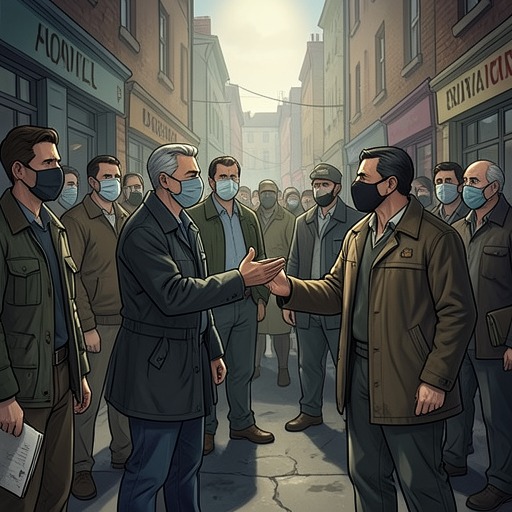
The Vampire Prince’s BrideVampires are one of the book’s central supernatural peoples, defined by extraordinary strength and speed, a need for human blood, vulnerability to sunlight, and a society whose survival depends on human bodies and human cooperation. They are not simply immortal predators: the narrative presents them as an organized civilization with kings, clans, councils, armies, families, donors, workers, and competing ideas about whether security requires domination or coexistence. Their power is therefore inseparable from dependence. They rule humans and other species, yet without human wives and human blood they face extinction.
Nature, Bodies, and Limits
Vampires are described as stronger and faster than human beings, and many regard themselves as godlike in comparison with mortals. Their physical beauty often accompanies that danger. Lady Jennifer Lindgern appears with golden hair, alabaster skin, and an aristocratic bearing, while the men accompanying her are tall, ornate, and beautiful except for their crimson irises. The contrast between elegance and violence is deliberate: their courtly appearance does not lessen the threat represented by their strength, their fangs, or their appetite.
The vampire condition is not ordinarily acquired by humans. The human residents who live among vampires and are regularly fed from may develop slowed aging, increased strength and speed, and a taste for blood, but they remain human. Vampires are born vampires, and are usually male. This biological distinction makes human women essential to the continuation of the species. Darius understands that without human wives such as Cleo, vampires would become extinct within three generations. The human wife is consequently both a person within the social order and a reproductive necessity around which that order has been built.
Sunlight is another defining limit. Vampires are photosensitive; exposure dries them out, while prolonged exposure turns them to ashes or dust. The Fort conceals this vulnerability through false windows: its eighteenth-century mansion has bricks beneath plaster and plasma screens that broadcast an exterior view, allowing the interior to remain dimmer than real sunlight. The building’s architecture is thus an expression of vampire survival, disguising imprisonment as domestic comfort while keeping the sun outside.
Vampires can be killed by specialized weapons. Alice carries a blade forged from pure silver, engraved with protective sigils, blessed during the summer equinox with a high priest’s blood, and mounted in a dragon-fang hilt. It is described as one of the few weapons capable of truly killing a vampire. The existence of such weapons prevents vampire power from becoming absolute and places their supernatural bodies inside a wider ecology of magical, religious, and species-based counterforces.
Ancient Power and Political Order
The vampire world possesses a long history of monarchy, aristocracy, warfare, and inherited authority. Iosif has ruled the lands between the Black Sea, the Carpathian Mountain range, and the Danube River for almost two thousand years. His portrait hangs above the mantel in Darius’s study, where Darius stared at it as a boy and imagined one day wearing the crown. Iosif’s reputation rests partly on his victories over shifters, who once ran rampant and murdered recklessly, and the memory of those campaigns gives vampire rule both heroic grandeur and a permanent military logic.
Darius’s position shows how succession is tied to interspecies politics. Iosif and his human mate had no children, and Iosif made clear that the vampire chosen to replace him would need good relations with humans. Darius therefore married Cleo, a twenty-year-old human woman, after choosing her as his wife. The marriage is politically useful, but the narrative also gives it personal and emotional dimensions: Darius admires Cleo’s confidence, her beauty, and her preference for outreach and aid over conquest. Her work with other wives includes plans to strengthen vampire relations with outlying communities and increase assistance to areas affected by earthquake flooding.
Vampire governance is repeatedly tested by the question of how much violence is necessary. Darius does not like killing and never developed the emotional hardness that older vampire generations treat as a mark of honor. He can act without hesitation when no alternative remains, but he recognizes the moral cost of violence. His conflict with shifters is not presented as a simple triumph of one species over another: both sides are described as forces that will not surrender, leaving violence as the likely result until something changes.
Sheridan represents a later and more reform-minded form of kingship. As king, he tells Romanoff that it is not the general’s place to challenge his decisions. Romanoff opposes bringing humans inside the city walls to provide blood for the palace, preferring the older practice of hunting humans. He also condemns low-born vampires who mingle with humans, arguing that the practice will lead to human deaths and renewed persecution. Sheridan rejects this position because it threatens both human lives and vampire survival. He regards his responsibility as keeping his people safe, and sees uncontrolled predation as a path toward the destruction of the entire vampire population.
Blood, Human Dependence, and Social Institutions
Blood is the material foundation of vampire society. At the Fort, more than three hundred people live within a complex of over five hundred rooms spread across roughly ten stories, most of them underground. The residents receive weekly assignments, ranging from important duties to menial work, because the community must organize itself around its special dietary needs. Viktor, the head of the household and Valnoir’s father, announces that blood stocks are neither being replenished nor depleted at a safe rate. The shortage becomes a collective danger rather than a private inconvenience.
The Fort’s response is institutional rather than purely predatory. Humans are brought to its lowest level, usually voluntarily or through recruitment, and are given nourishing food intended to promote blood production. Nurses extract and store their blood. Some donors seek the physical high associated with a vampire bite, while others prefer blood collection through tubes and other medical methods. This system complicates the usual image of the vampire as an isolated hunter: the Fort has converted feeding into labor, healthcare, storage, scheduling, and administration, even though the arrangement still places human bodies at the center of vampire survival.
Maribel Arnaz enters this system after losing her home and applying to become a living blood donor inside the vampire city. The application is frightening because the interview places her directly across from an unblinking vampire, yet she has no home to return to. Her circumstances expose the economic pressure beneath the donor system: the arrangement can be framed as employment or voluntary service, but it also attracts people whose choices have already been narrowed by loss and insecurity.
The city itself reflects a different model of human-vampire coexistence. Maribel sees a rich, well-maintained vampire town whose residents appear to care for one another, and Sheridan tells her that some citizens oppose his marriage to a human. His marriage demonstrates the political value placed on human integration, while Romanoff’s hostility reveals the continuing strength of older vampire customs. The conflict is not between vampires and humans alone; it also divides vampires who imagine survival through shared institutions from those who want to restore open hunting.
Family, Reproduction, and the Weight of Time
Vampire families are shaped by longevity, hierarchy, and reproductive expectation. Sheridan recounts that nearly three hundred years earlier he entered an arranged marriage as the son of a poor baron in Eastern Europe. His bride came from a wealthy untitled family, and their parents considered the match ideal regardless of the couple’s wishes. Sheridan initially cared only that she was beautiful and dismissed love as irrelevant. She fell in love with a servant and fled with him, and Sheridan pursued them in wounded pride, intending to kill the servant and force his former wife back to his estate. His recollection reveals how aristocratic marriage, possession, and violence were once treated as ordinary components of vampire social life.
The Fort’s history preserves the same mixture of kinship and coercion. During the Great Plague, Viktor bit and transformed Valnoir, Magnus, Charlotte, Victoria, Lady Harriet, and Lady Mary. Valnoir was twenty-four at the time, while Charlotte was four. Viktor’s household therefore combines biological family, step-family, marriage ties, and vampiric transformation, all frozen across centuries. Yet longevity does not preserve affection. Charlotte’s death leaves Lady Harriet depressed, while Valnoir describes the older vampires as having lost most feelings through sheer duration. In his account, lust survives more reliably than love, and even family loyalty has become conditional.
The Fort also contains a Harem, where vampires—especially men in their prime—seek sexual relationships. The institution is connected to a culture in which reproduction and desire are separated but never entirely independent. The need for human wives gives heterosexual human-vampire relationships political importance, while the Harem expresses a parallel economy of appetite and repetition. Together, they show how vampire longevity produces both abundance and stagnation: the species has centuries to pursue pleasure, but its population remains biologically dependent on humans.
Tradition is another inheritance whose meaning has been obscured. Vampires know that customs and rituals govern their behavior, but the reasons have been lost through generations of history. The Fort lacks the ancient vampires who might explain those origins. Its inhabitants therefore preserve practices whose authority exceeds their understanding, producing a society that is ancient in form but uncertain in memory.
Conflict, Adaptation, and Narrative Significance
The vampire-shifter conflict gives the species its military identity. Darius grew up admiring Iosif’s campaigns against shifters, and he treats reports of wolves, dead sheep, and a missing shepherdess as both a security threat and a political danger. If humans believe vampires are allowing shifters to abduct them without consequence, unrest may follow. Vampire power consequently depends on managing human perception as much as on defeating enemies in battle.
At the same time, the book repeatedly places vampire violence beside alternative strategies. Cleo imagines aid, diplomacy, and outreach; Darius sees her methods as a valuable complement to his military role. Sheridan protects a blood system that Romanoff considers disgraceful. Human donors are recruited, housed, fed, and medically managed rather than simply hunted. These contrasts establish adaptation as the species’ central survival problem. Vampires cannot remain unchanged, because the old model of predation risks human rebellion, renewed persecution, and demographic collapse.
Their narrative significance lies in this contradiction. Vampires appear to possess the classic attributes of absolute predators—strength, speed, longevity, aristocratic power, and the ability to make humans fear them—yet the story keeps exposing the limits beneath that power. They need human blood. They need human wives. They require institutions to conceal the sun, councils to regulate collective life, donors to replenish their stores, and rulers willing to restrain older generals. The species is therefore not defined only by what it can dominate, but by what it cannot survive without: human bodies, human trust, and the willingness to change.